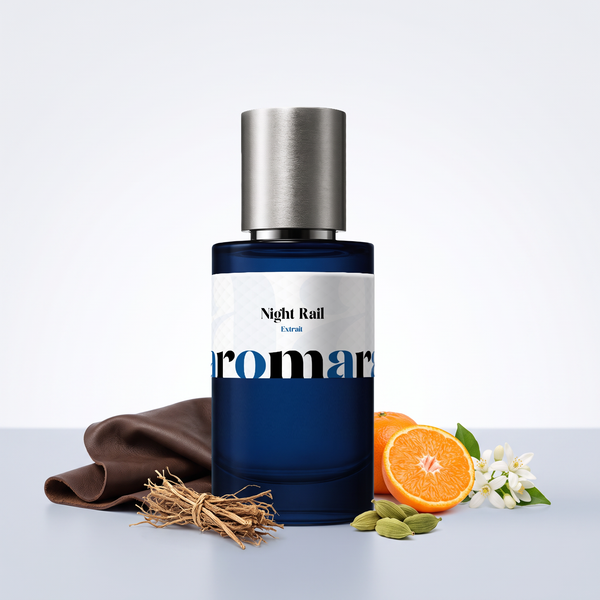
Black pepper oil cannot make you sneeze. The sting in a peppercorn comes from piperine, and piperine is too heavy to survive distillation. It stays behind in the still. What carries over is everything else about pepper: the warmth, the dryness, the woody crackle.
The oil is steam distilled from the dried berries of Piper nigrum, the same vine that fills your grinder. A 2019 safety review in the journal Food and Chemical Toxicology lists its main components as beta-caryophyllene, limonene and sabinene. Beta-caryophyllene does the heavy lifting. The same molecule turns up in clove, and on skin it reads warm, dry and faintly smoky rather than hot.
Perfumery worked this out long ago. Caron put the spice front and centre in Poivre back in 1954. Fifty years later Jean-Claude Ellena built Poivre Samarcande for Hermes around the memory of a felled oak outside his house, and what stayed with him was "the peppery, musky and slightly smoky scent of the cut wood". In 2016 Comme des Garcons released a fragrance called, simply, Black Pepper.
The clearest modern example sits on half the bathroom shelves in Britain. Versace's Dylan Blue (2016, Alberto Morillas) runs black pepper through its heart to stop a fresh aquatic from going flat. That is the note's real job now. It rarely stars. It gives smooth compositions their texture, the way cracked pepper rescues a bland plate.
One thing worth knowing before you buy: pink pepper is not pepper. It comes from a different tree entirely and behaves differently in a bottle, which is why we gave it its own profile. A fragrance listing both is using two different tools.
Smell the pepper effect in action: Dylan Bleu is our take on Versace Dylan Blue, and Rose Brew, our take on Tom Ford's Cafe Rose, opens on black pepper and saffron before the rose arrives. Both are UK-made sprays at 35% extrait. More in our Versace-inspired collection.