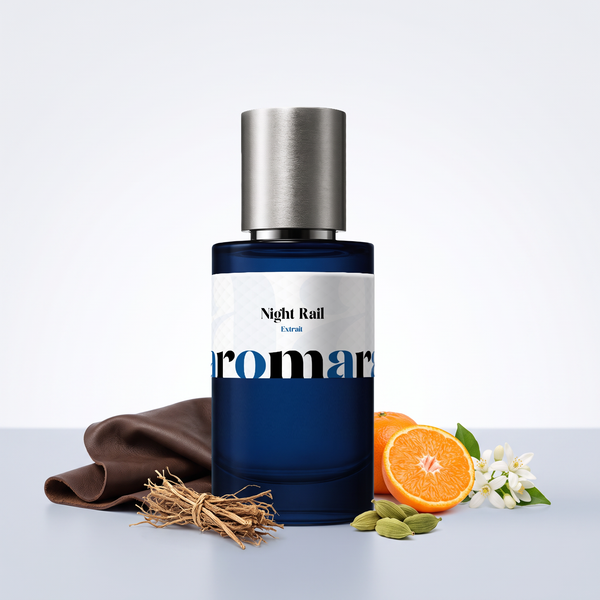
Le Labo Santal 33 is the dry, creamy sandalwood that came to define the 2010s, the scent of every boutique hotel and flat white. A 50ml is around £176 in the UK (checked September 2026). Our take, Santal Thirty Three, holds the same smoky-woody signature for £40.
Santal Thirty Three, our take on Santal 33 by Le Labo. 35% Extrait, 7+ hours guaranteed, 60-day money-back. Try the 5ml for £6.99, or the 50ml at £40 (buy any 2, get 1 free).
Some fragrances become popular. Santal 33 became a punchline. At the peak of its fame, around the middle of the 2010s, you could not walk through a certain kind of neighbourhood, the sort with exposed brick and four-pound flat whites, without catching it. It drifted out of boutique hotels, yoga studios and the collars of half the people on the train. The press took to calling it, more or less, the smell of gentrification.
The strange part is that it began life as a candle.
A Brooklyn rebellion
Le Labo was founded in 2006 by Fabrice Penot and Edouard Roschi, two industry veterans who set out to do the opposite of everything big perfumery stood for. No celebrity faces, no glossy campaigns, no enormous launches. Instead, stripped-back apothecary shops, fragrances blended in front of you and labelled by hand with your name and the date. The names were simply an ingredient and a number. It was perfume as anti-marketing, and it was catnip to a generation tired of being sold to.
The Marlboro Man in a bottle
Santal 33 was composed by Frank Voelkl, a Firmenich perfumer, and released in 2011. The brief was pure Americana: a lone figure and his horse beside a fire on a great plain, under a wide evening sky. The myth of the American West, rendered in smoke and wood.
Voelkl built it around cardamom, iris and violet over a smoky, leathery wood accord of Australian sandalwood, papyrus and cedarwood, with ambrox lending that strange, glowing persistence. He has called it his masterpiece. It started as a candle on the shop shelves, he loved it so much he wore it himself, and the house eventually turned it into a fine fragrance. The rest is a decade of imitation.
What it actually smells like
Creamy, dry, woody and faintly spiced, with a soapy-violet shimmer up top that reads clean and slightly metallic at once. The sandalwood here is not the soft milky kind but a drier, smokier version, closer to warm cedar pencils than to a spa. It is unmistakably androgynous, sits quietly on some skins and projects like a beacon on others, and it is instantly recognisable, which is both its triumph and, for some, its curse.
Santal 33 vs Santal Thirty Three
| Le Labo Santal 33 | Santal Thirty Three | |
|---|---|---|
| Price | around £176 for 50ml (Sep 2026) | £40 for 50ml, from £6.99 |
| Concentration | Eau de Parfum | 35% Extrait |
| Wear time | several hours | 7+ hours, guaranteed |
| If you do not love it | no refund once used | 60-day money-back |
| Where to buy | Le Labo, Liberty, Harrods | aromara.co.uk |
How much is Santal 33 in the UK?
A 50ml of Le Labo Santal 33 is around £176 in the UK (checked September 2026), with the 100ml higher again. For the money you get a genuinely original fragrance and a piece of 2010s culture. You also get the single most recognisable wood scent of the decade, so there is a real chance the person next to you has already worked out what you are wearing. For a house built on individuality, that became the least individual choice imaginable.
Santal Thirty Three: the 35% interpretation
This is where we come in, and we will be straight about what we are. Our Santal Thirty Three is Aromara's interpretation of that famous wood character, not a counterfeit and not a Le Labo product. It carries no branding and makes no claim to be the original. It chases the part that matters: the creamy, smoky sandalwood, the violet-and-iris shimmer, the dry cedar-and-leather warmth that made the original so addictive.
The difference is in two numbers. Ours is built at 35% Extrait, roughly double a standard eau de parfum, so the wood holds for seven hours or more rather than fading by lunch. And it costs £6.99 for a 5ml to test it properly, against around £176 for a 50ml of the original. We guarantee the wear time in writing, with 60 days to send it back for a full refund if it does not last.
What our own sales say
Santal Thirty Three sold 20 bottles in the last 90 days and holds 4.6 stars from its first 5 reviews. That puts it among our steadier woods, bought by people who want the Santal 33 character without the Santal 33 price. Nobody else can quote that figure, because it is our own shop data.
Our guide to extrait de parfum explains why concentration matters so much, and the strongest perfume dupes in the UK shows where our range sits. If you love a creamy sandalwood, our Sandalwood Major is the natural next try.
Exploring the rest of the house? See the best Le Labo dupes in the UK.
Frequently asked questions
Who created Le Labo Santal 33?
It was composed by the Firmenich perfumer Frank Voelkl and released in 2011. It famously began as a Le Labo candle before being launched as a fine fragrance.
How much is Santal 33 in the UK?
Around £176 for a 50ml (checked September 2026), with the 100ml higher again. Santal Thirty Three is £40 for a 50ml, or £6.99 for a 5ml sampler.
Why is Santal 33 so famous?
Its dry, creamy, androgynous sandalwood became ubiquitous through the 2010s, drifting out of boutique hotels and coffee shops until it was nicknamed the smell of a whole cultural moment. It is one of the most recognisable wood scents ever made.
Is Aromara's Santal Thirty Three the same as Le Labo?
No. It is an independent composition inspired by the same wood character, built at 35% Extrait for longevity and sold at a fraction of the price. It is not affiliated with Le Labo.
Aromara is an independent UK fragrance house. Our fragrances are original compositions inspired by the character of well-known designer scents. We are not affiliated with Le Labo, and all trademarks belong to their respective owners. Every Aromara fragrance is made in the UK at 35% Extrait, with a 7+ hour longevity guarantee and a 60-day money-back promise.